
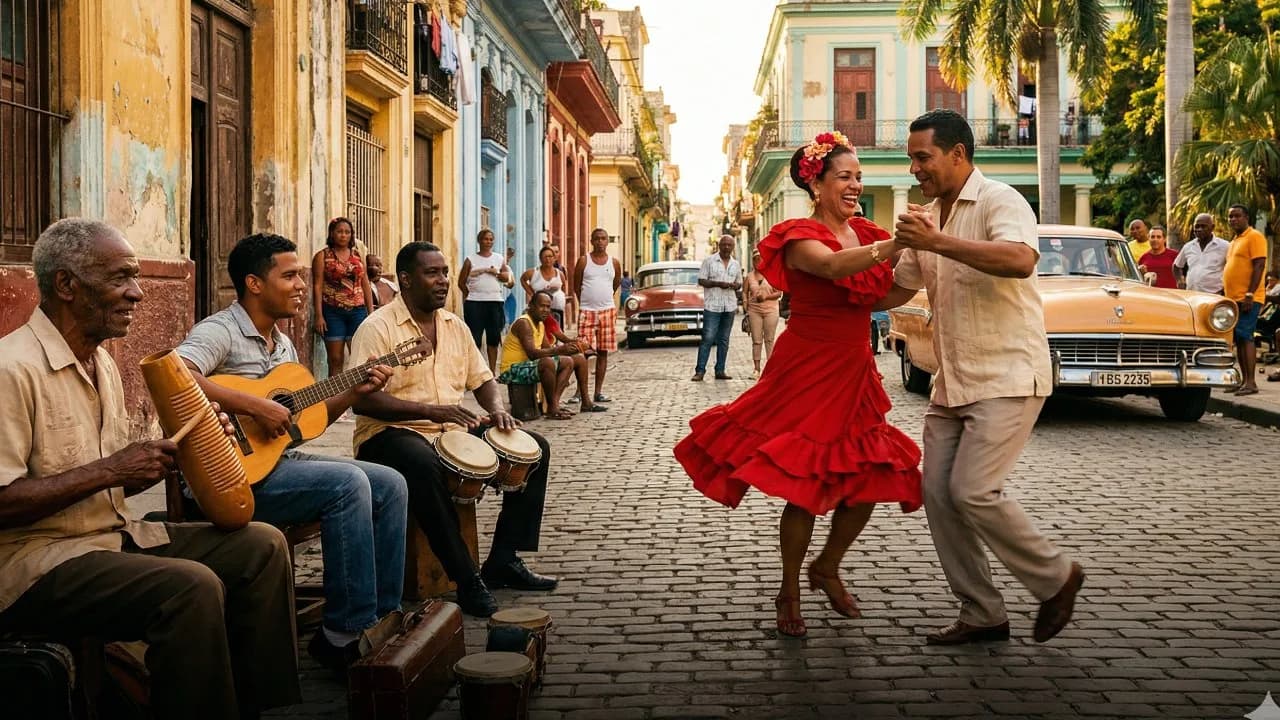
The Roots of Salsa: A Journey Through Time
Salsa is more than a dance — it's a living history of culture, passion, and human connection. What drives millions to dance floors worldwide today began in the streets and living rooms of Cuba. At Cubania Nederland, we bring this rich tradition to the Netherlands, but let's first travel back to where it all started.
African and Spanish Origins
The history of salsa begins long before the word "salsa" even existed. In the 16th and 17th centuries, African rhythms brought by enslaved people blended with Spanish melodies on the island of Cuba. This fusion created something truly unique: a musical language that embraced both the clave (the rhythmic heartbeat of African music) and the melodic structures of European tradition.
Son Cubano, born in eastern Cuba around 1900, is widely considered the direct ancestor of salsa. With instruments like the tres (a Cuban guitar), bongos, and maracas, Son laid the foundation for everything that followed.Casino: The Cuban Way of Dancing
In the 1950s, a dance style called Casino emerged in Havana's social clubs — named after the "Casinos Deportivos" where young people gathered to dance. Unlike later linear styles, Casino is characterized by:
- Circular movement — partners orbit around each other
- Rueda de Casino — group dancing in a circle with a caller announcing figures
- Spontaneity and playfulness — improvisation is at the core
- African body movement — the whole body moves, not just the feet
From Havana to New York
In the 1960s and '70s, Cuban and Puerto Rican immigrants brought their music to New York City. In the barrios of the Bronx and Spanish Harlem, Cuban Son merged with jazz, plena, and bomba. Musicians like Celia Cruz, Tito Puente, and the Fania All-Stars gave this music a name: salsa.
Fania Records became the Motown of Latin music. New York's energy — raw, urban, unstoppable — gave salsa a new face. But the Cuban core remained: the clave, the tumbaos, the feeling.
Salsa Reaches Europe and the Netherlands
From the 1980s onwards, salsa spread across Europe. In the Netherlands, the salsa scene grew steadily, peaking with an explosion of dance schools and festivals in the 2000s. Today, the Netherlands is one of the most active salsa countries in Europe.
But not all salsa is the same. While many schools teach "linear" styles (LA style, New York style), Cubania stays true to the original Cuban tradition. Why? Because Casino isn't just a dance — it's a cultural experience. The musicality, the playfulness, the social nature of Rueda de Casino — that's what makes salsa truly special.
Salsa Today: Timba and the New Generation
Timba, the modern evolution of Cuban salsa music, pushes boundaries further. With more complex rhythms, influences from funk, hip-hop, and jazz, and an intensity that will blow you away, Timba is the soundtrack of contemporary Cuban dancing.Artists like Los Van Van, Havana D'Primera, and Elito Revé keep the tradition alive while constantly innovating. On the dance floor, this translates into a dance deeply rooted in tradition yet constantly evolving.
Experience History on the Dance Floor
At Cubania Nederland, we believe the best way to understand salsa's history is to experience it. In our classes in Den Bosch and The Hague, you don't just learn the steps — you discover the culture, musicality, and joy that have made salsa special for over a century.
Whether you're a beginner taking your first steps or an experienced dancer looking to go deeper: the history of salsa lives in every turn, every Rueda, and every moment of connection on the dance floor.
Ready to be part of this history? Check out our courses and discover how Cuban salsa can enrich your life.